ʻĀINA STEWARDSHIP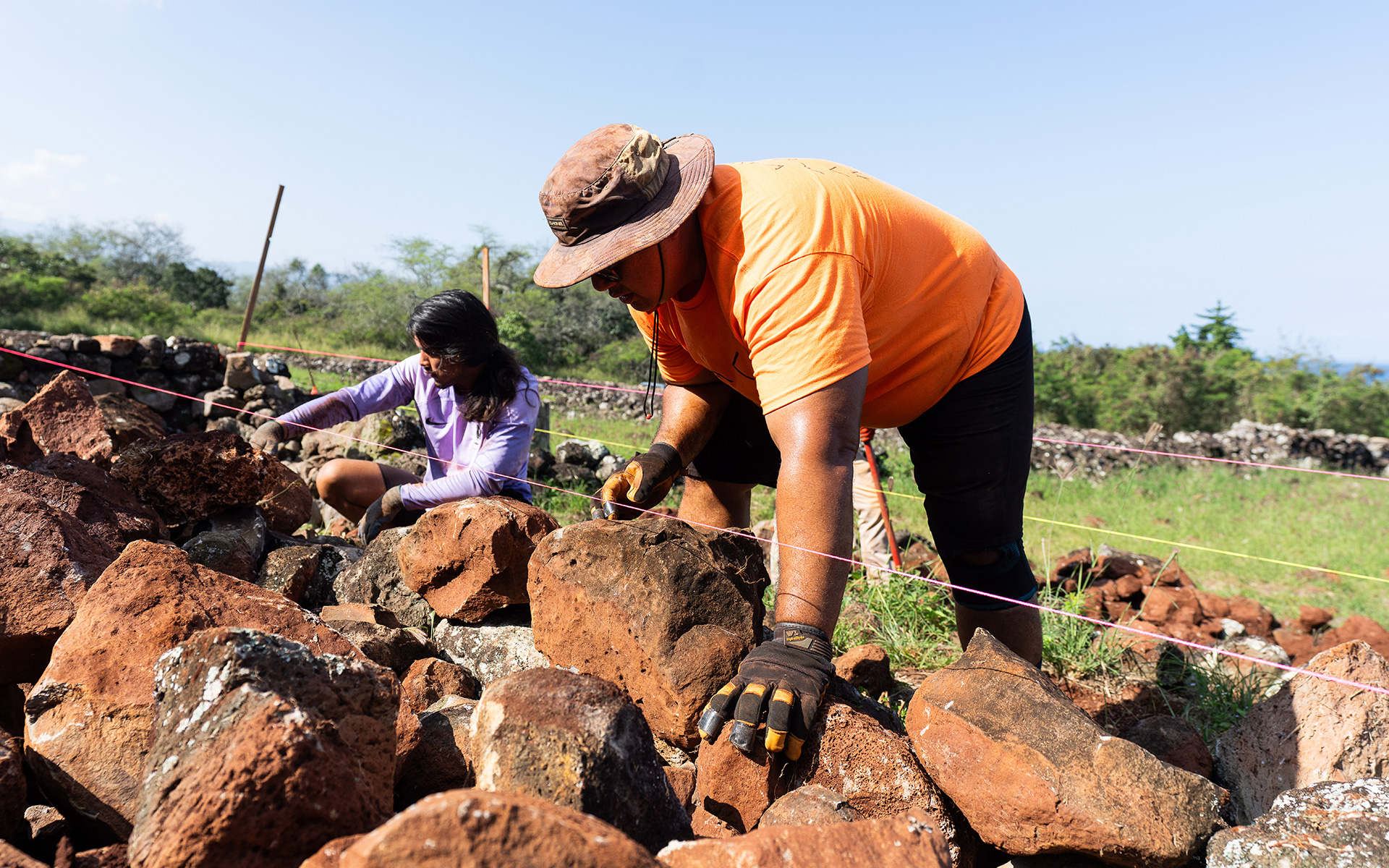
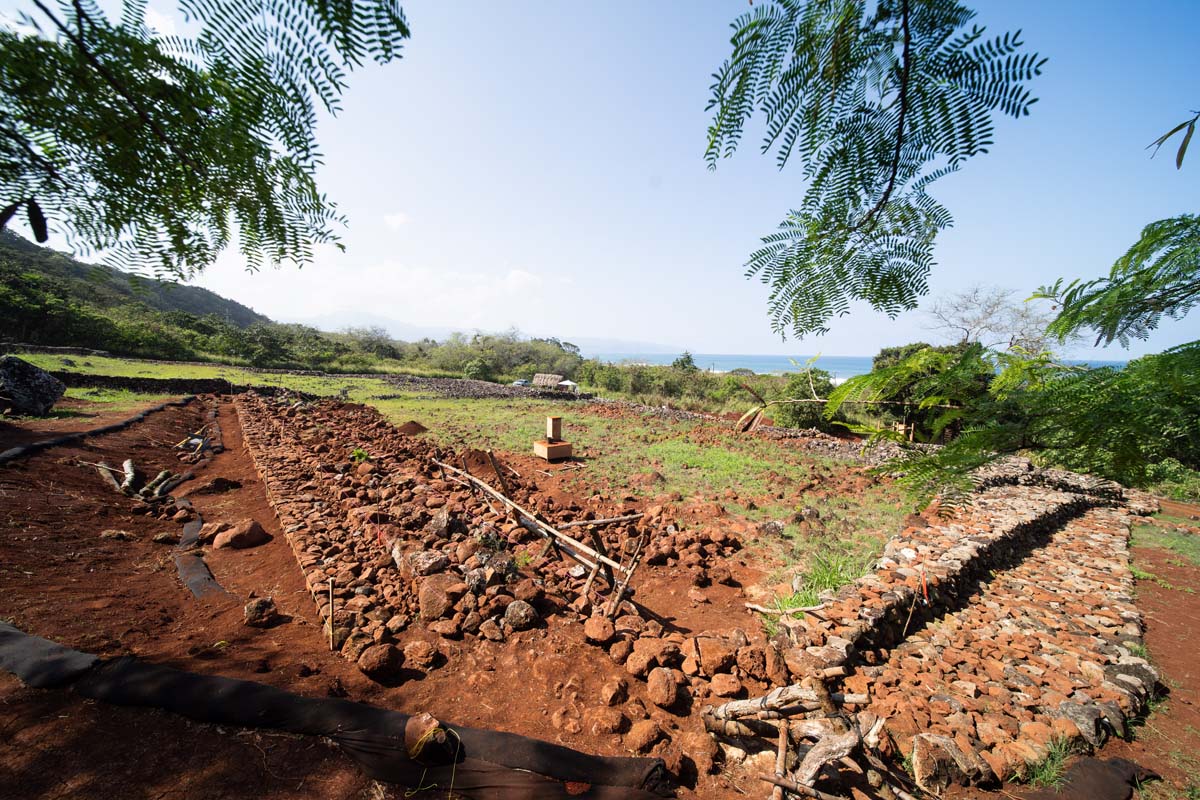
Ke Kula ‘o Kamehameha has shepherded the painstaking restoration of Kūpopolo Heiau on O‘ahu’s North Shore. The kānaka-led effort to bring the one-acre site back from the brink serves as a lama kuhikuhi — a bright beacon — demonstrating how breathing life into ‘āina helps breathe life into our lāhui.
Located on ‘Āina Pauahi just 300 yards from Waimea Bay, mo‘olelo vary as to why this wahi kūpuna was built. One mo‘olelo tells of it being constructed in the 18th century to serve as a thought portal to the island of Kaua‘i for the powerful O‘ahu kahuna nui and seer, Ka‘ōpulupulu. Another mana, or branch, of this mo‘olelo suggests Menehune built it much earlier and even brought in pōhaku from Mokulē‘ia, several miles away.
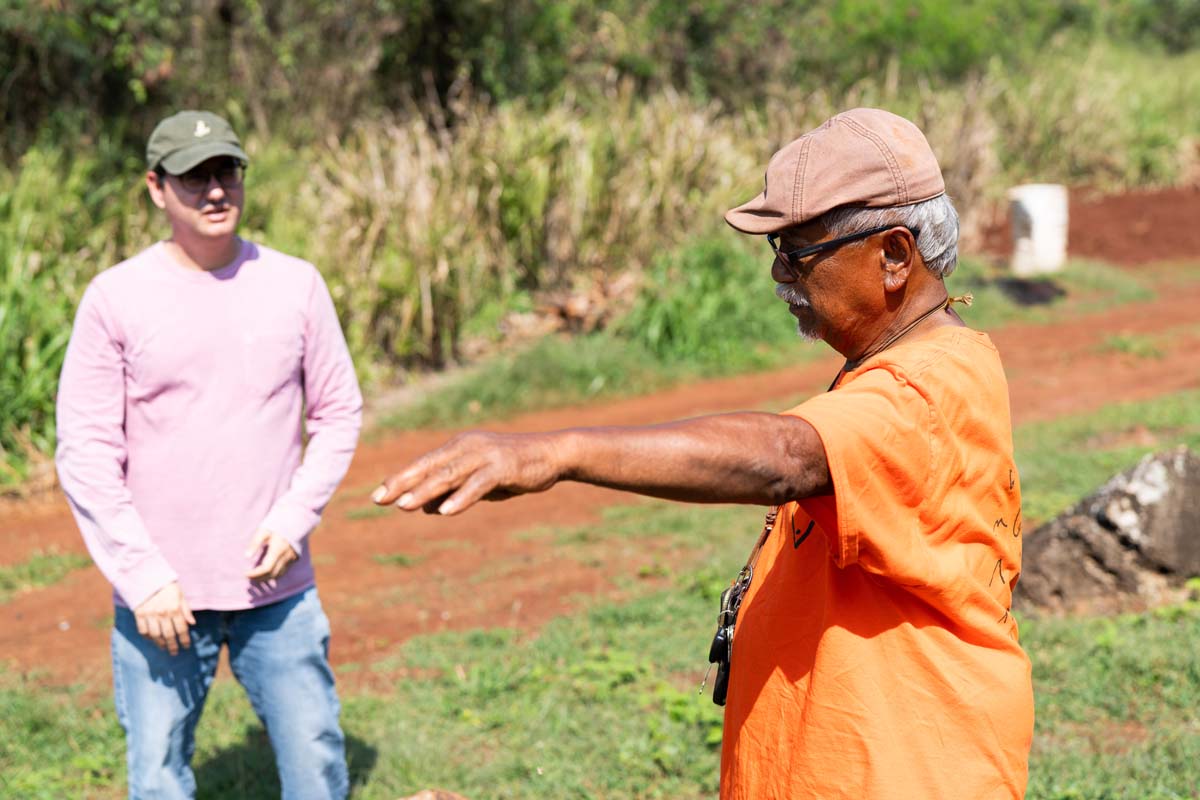
Jon Tulchin, a cultural resources manager with Kamehameha Schools’ ‘Āina Pauahi Group, says there’s evidence to support both mo‘olelo.
“The archeology is interesting. Radiocarbon dating of the heiau’s wall construction shows certain areas are much older and other sections that are from the time of Ka‘ōpulupulu, suggesting the ancient site may have been repurposed in the 1700s,” Tulchin said.
There’s far less intrigue in what happens next to the site once colonial forces took root in the islands. Grazing cattle trampled many of the rock walls, and runoff from a privately-owned plantation ma uka buried the heiau in 300 tons of lepo ‘ula‘ula. That’s the equivalent of a fully loaded 747 commercial plane sitting on top of the structure. Somehow Kūpopolo endured.
“This speaks to the ingenuity and the strength of design of our kūpuna. The fact that this structure can support 300 tons of weight for 100-200 years,” Tulchin said.
While the site may have fallen victim to man-made forces, having it become part of the ‘Āina Pauahi portfolio through nā ali‘i in the late 19th century prevented further degradation and desecration.
Starting in 2010, Kamehameha Schools began mapping the site. Restoration work went into high gear in the fall of 2023.
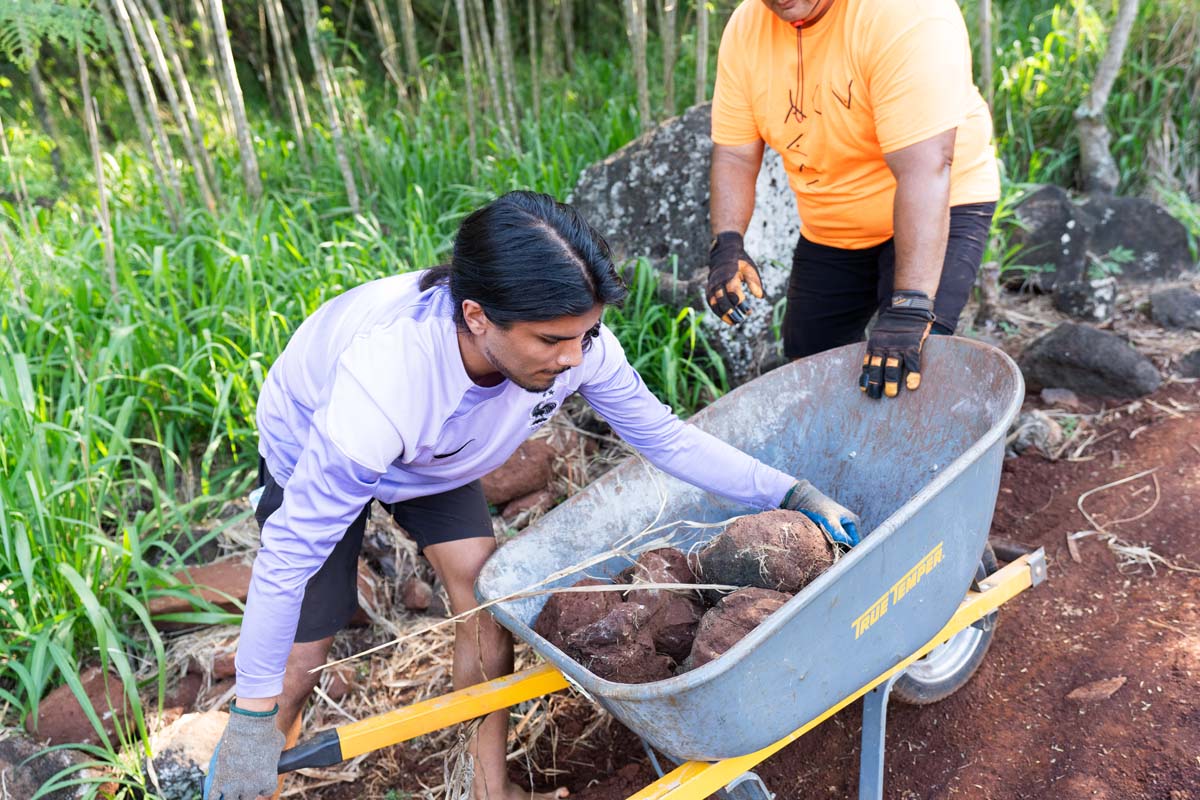
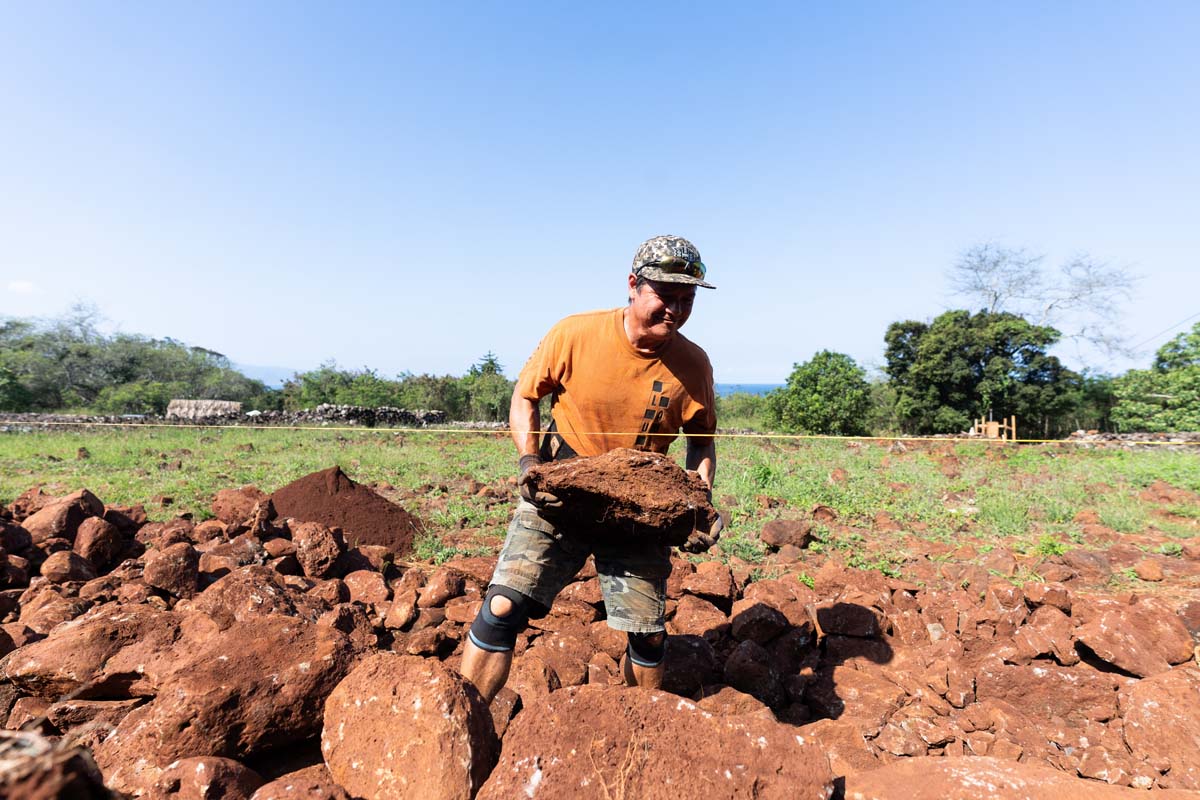
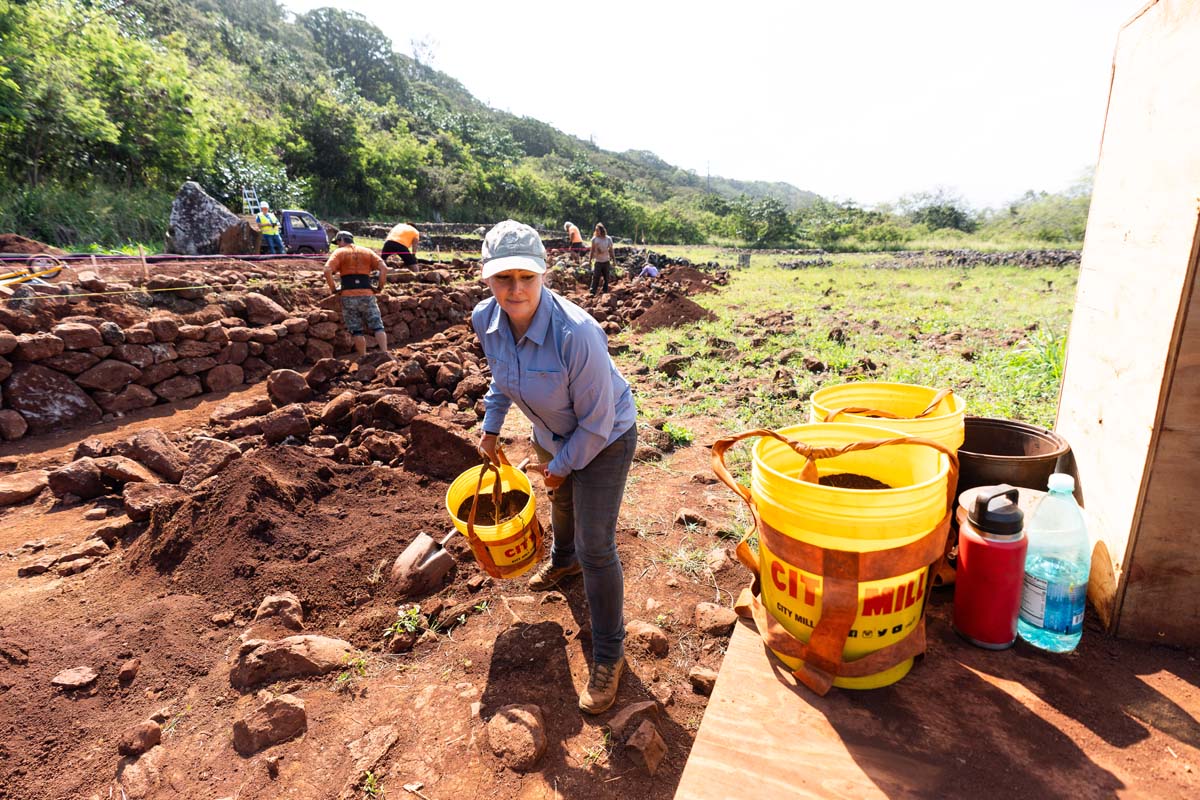
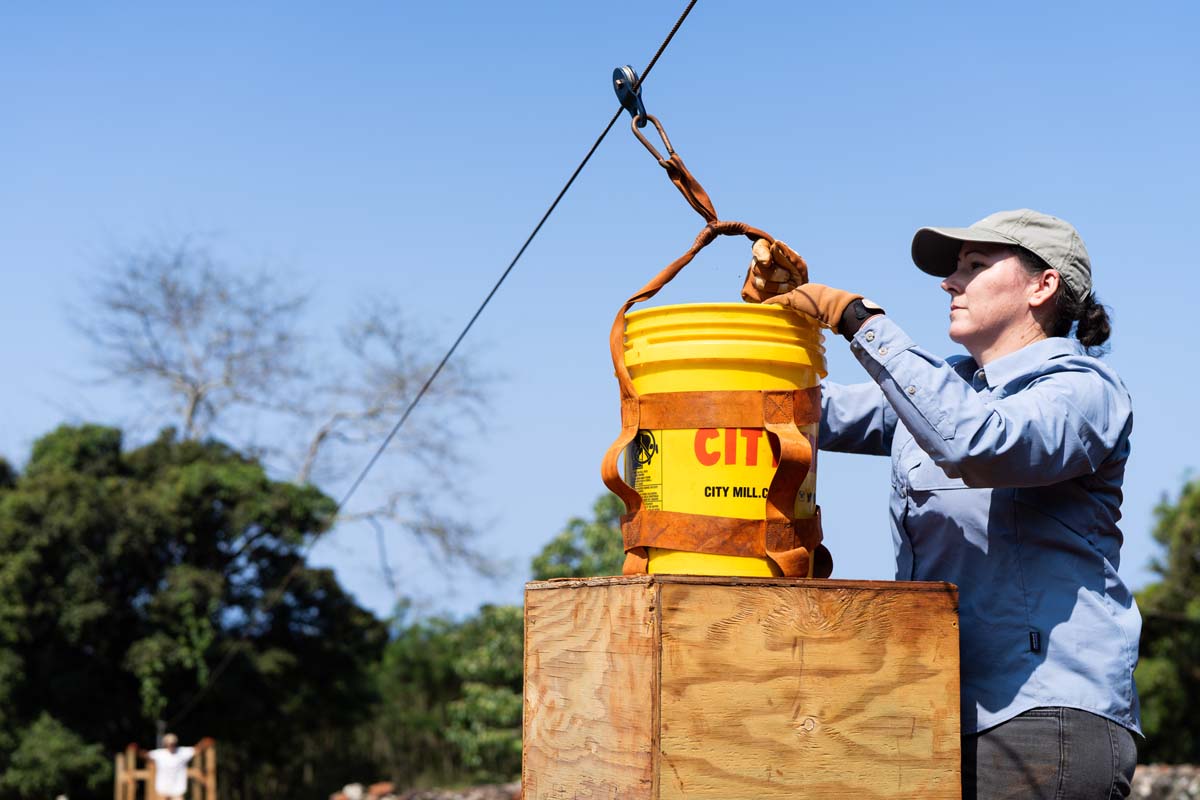
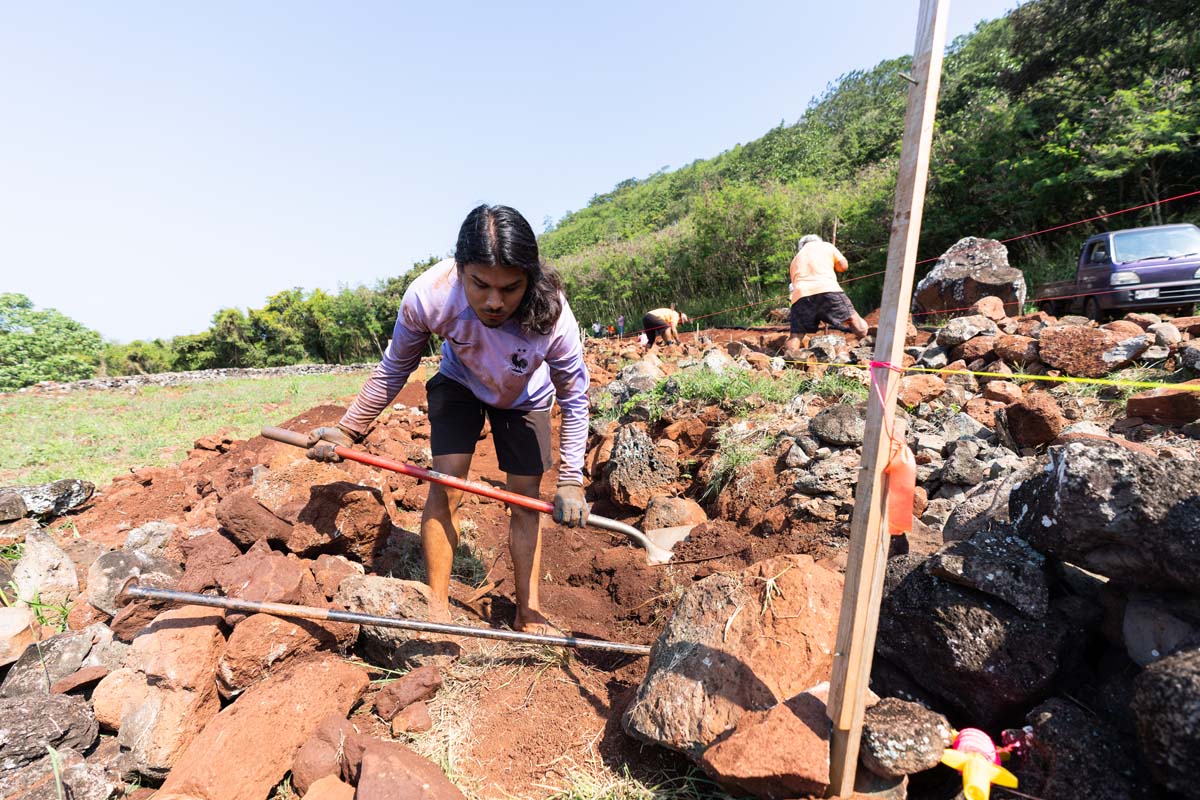
The removal of over 300 tons of lepo ‘ula‘ula was delicate and painstaking. No excavators, just hand tools and buckets. Contractor Pacific Legacy engineered an ingenious portable zipline pulley system that allowed workers to load the lepo into buckets and send it ma kai to a stockpile area without disturbing the rockwall structures. Well over 20 thousand bucketloads have been filled and emptied using this method.
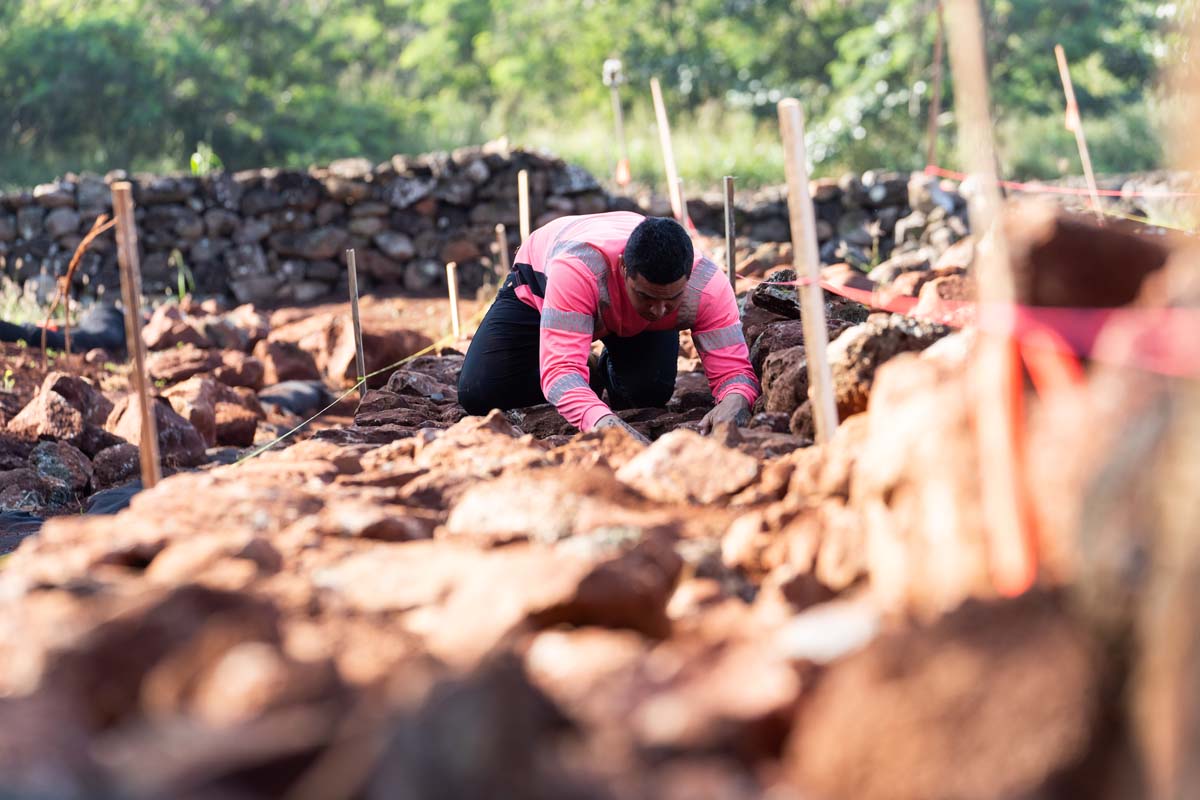
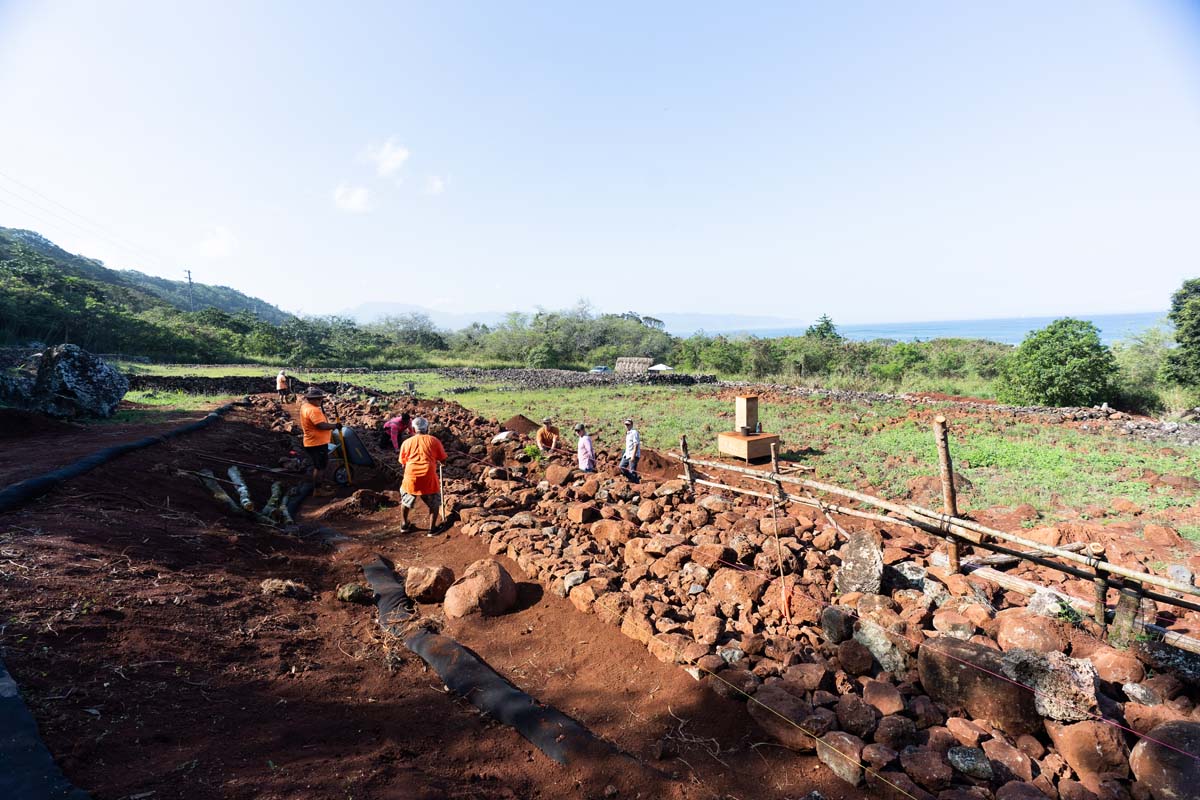
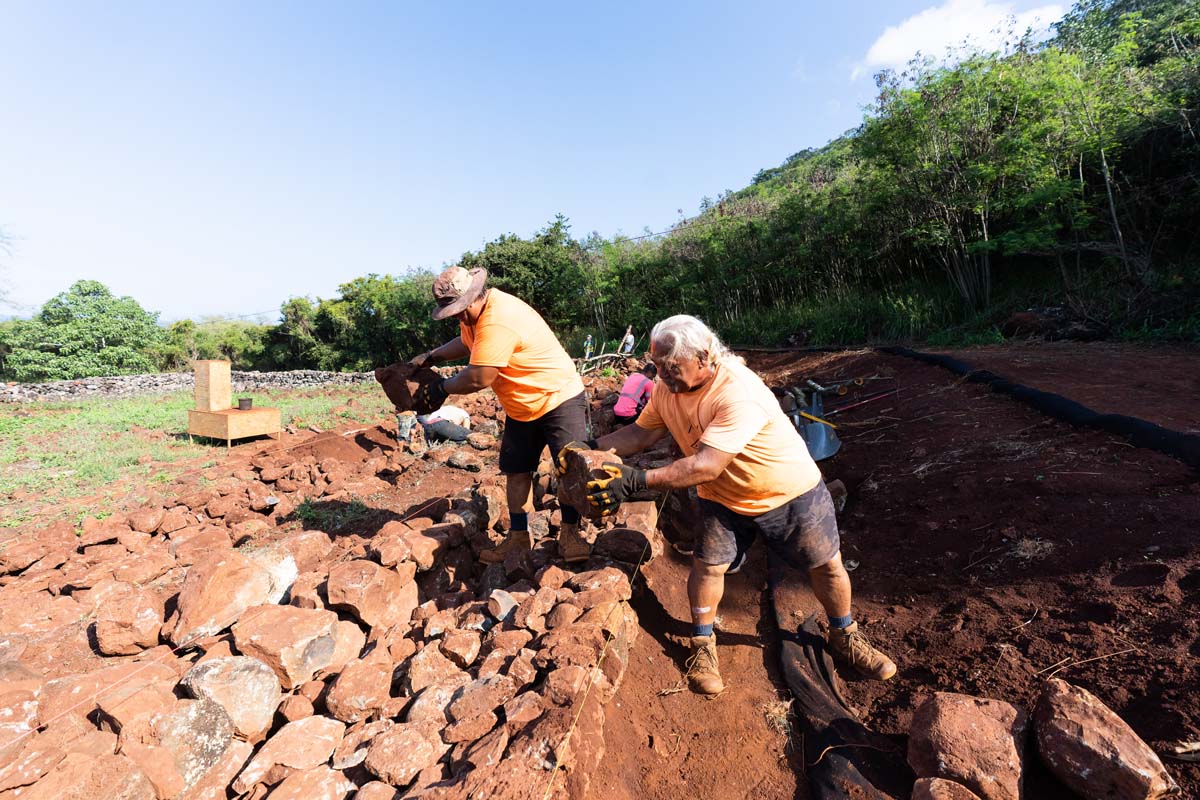
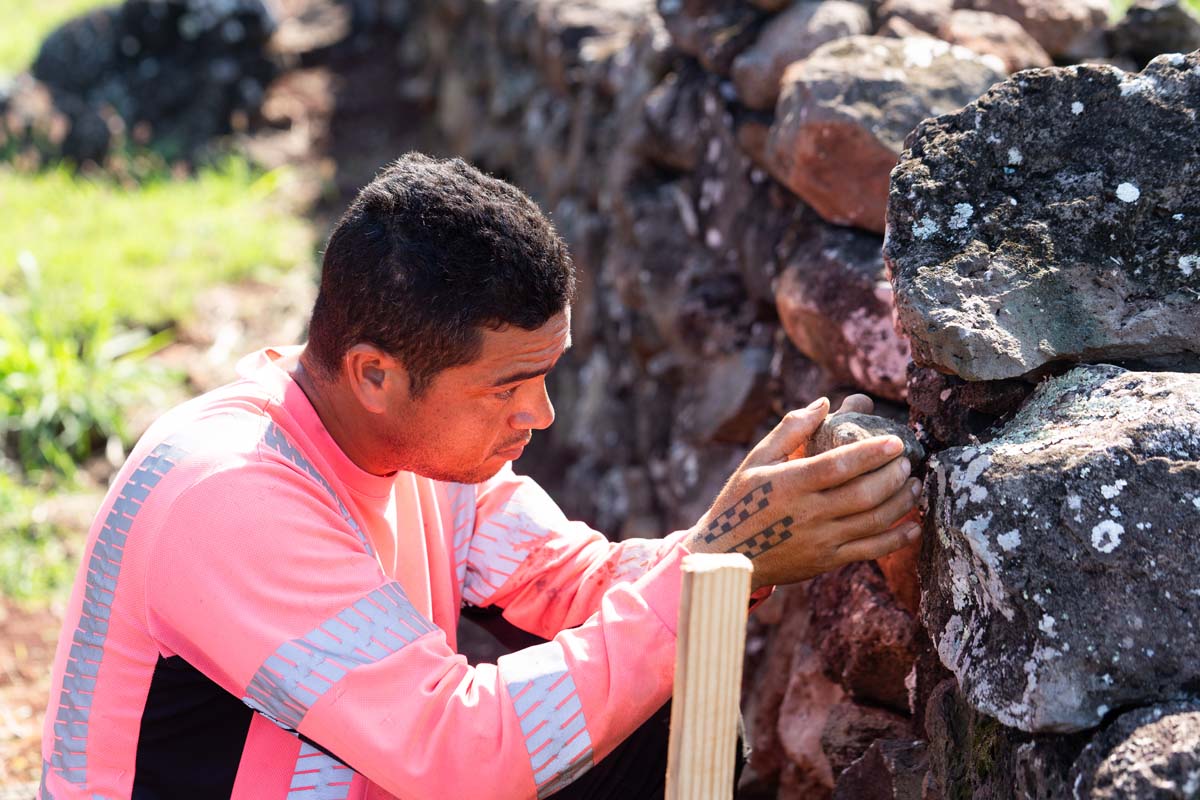
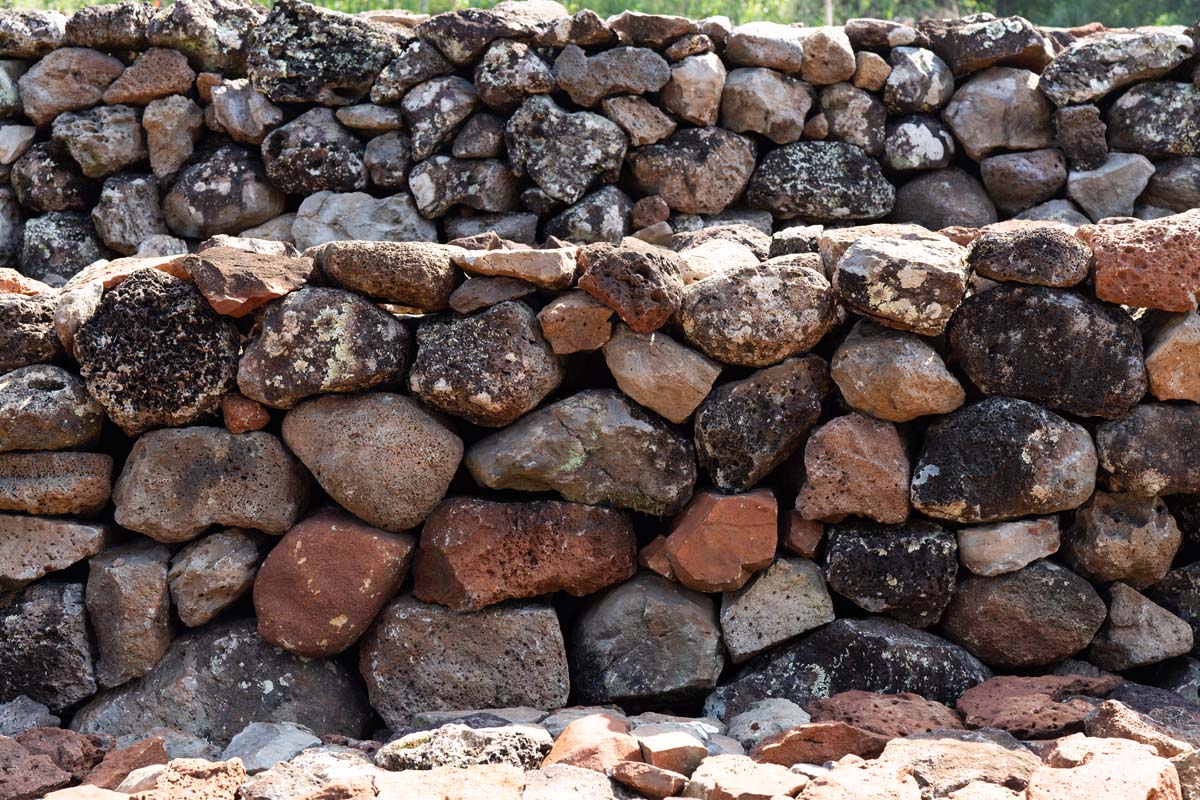
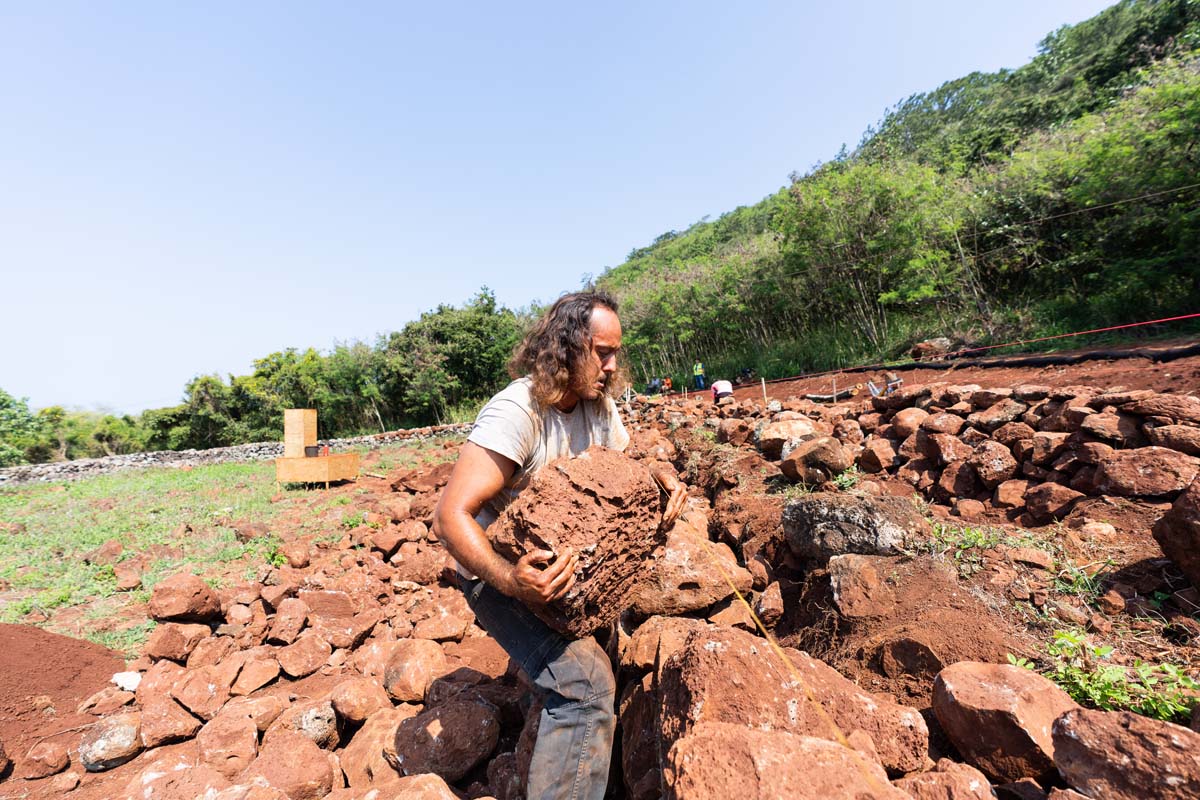
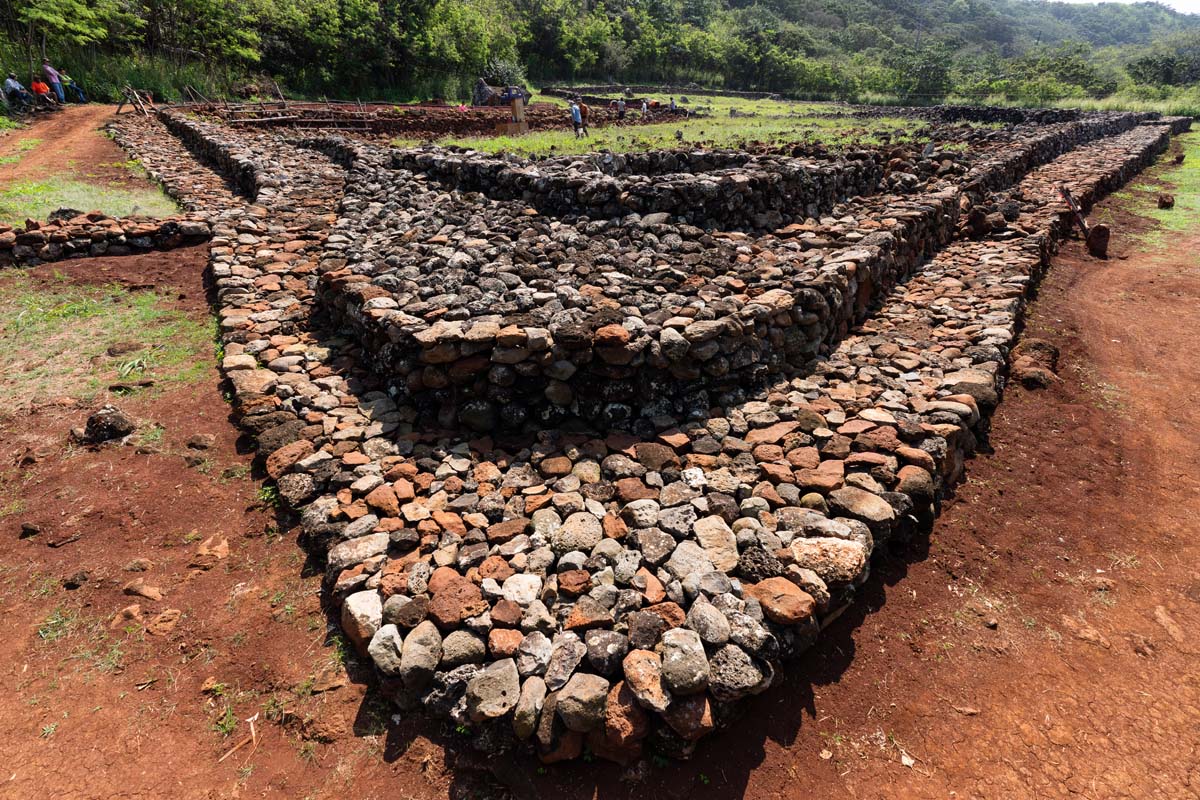
In 2024, with much of the soil removed, a group of uhauhumu pōhaku — stone masons — with on-site consultation from legendary builder Francis Palani Sinenci, began restoring the rockwall structure.
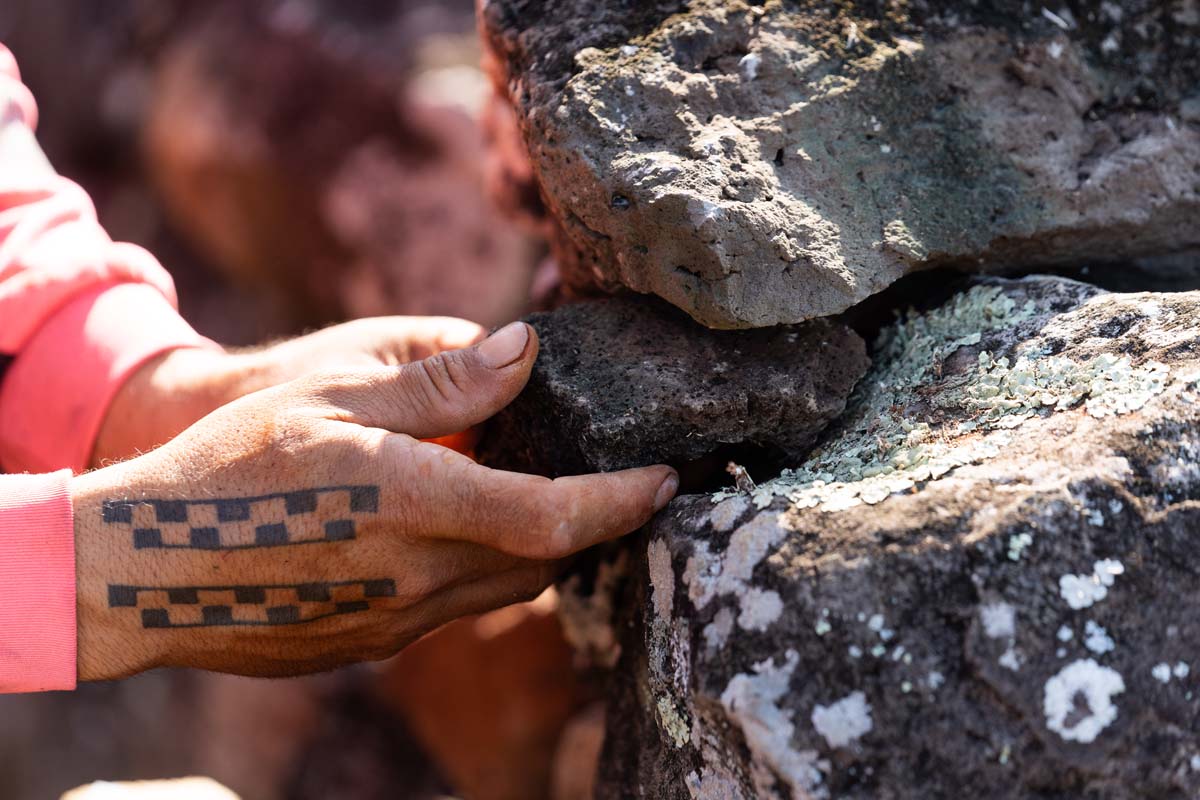
“Touching stones that were hundreds of years old. Touching stones that have been lifted by kūpuna. Just imagine. This is direct contact to the past,” said Sinenci, who in the 1990s was instrumental in bringing back the lost art of traditional kūkulu hale and uhauhumu pōhaku.
In the years that followed, kumu Sinenci helped create Hawai‘i’s Indigenous Architecture Building Code and founded Hālau Hale Kuhikuhi, ensuring this Indigenous knowledge will be passed on down through the generations.
“I believe I have created about three or four masters carrying on the tradition. I believe I helped them along. Now I know I can make and I got guys that can do it,” Sinenci said.
Sinenci is now well into his 80s, and his impact on Hawaiian hale building and heiau restoration is akin to those alaka‘i who brought back Hawaiian wayfinding.
At Kūpopolo, kumu Sinenci led the masons each work day in oli and hemū — a declaration of intent lest their presence anger spirits there.
“Every heiau, every fishpond, every hale we build, we always do the same protocol. Quiet the mind with the hemū and ask for ‘ike from above with the oli ‘E Hō Mai,’” Sinenci said.
The longer the masons spent unearthing and placing pōhaku, the deeper their connection grew.
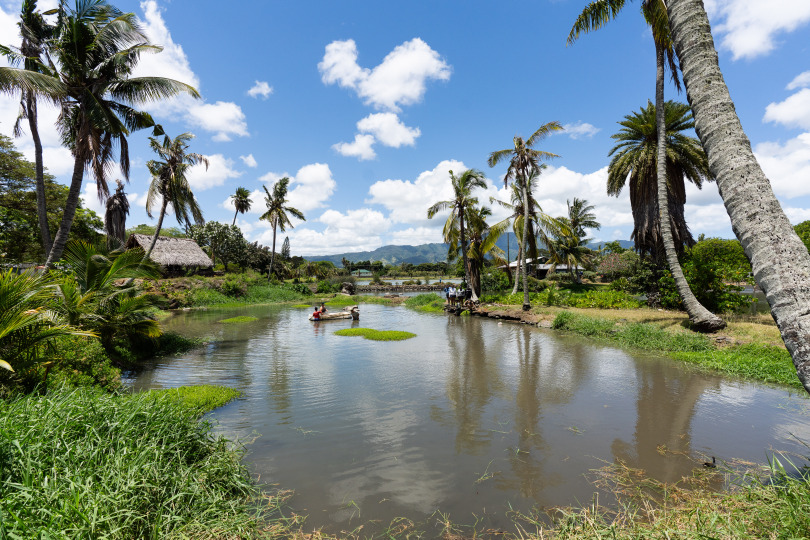
“You can hear the birds, you can hear the makani as it blows through the trees. You hear the pounding of the surf. Sometimes the surf is so big, it looks like we’re in fog because the ocean spray is so thick. You’re not just on a job site. It’s very different here,” said Kainoa Holt, a stone mason and protege of Sinenci.
“We feel like our kūpuna on the other side of the veil must have had a hand in bringing us to this space and allowing us to do this work,” said Kalawai‘a Moore, an alaka‘i mason, who also holds a Ph.D. and serves as director of Hawaiian studies at Windward Community College.
Under Sinenci’s tutelage, the masons knew to look out for an ingenious building method of our kūpuna. Pōhaku niho — triangular-shaped stones placed vertically — helped them find the ancient blueprint and borders of the structure. Just like one does when starting a complex jigsaw puzzle.
“We’re peeling back the layers and we’re seeing, wow, this line actually goes this way. Or look at this channel ... this must have been used for something. When you’re putting your hands on the site itself, you really get to experience what was built here. It has been incredible,” Holt said.
One unique feature crews unearthed on the site is two large sunken circular indentations on opposite ends of the structure directly overlooking Waimea Bay. The leading theory is that they functioned as outposts for kia‘i.
This and a good many more secrets remain in the pōhaku of Kūpopolo Heiau, waiting for future generations to ask the right questions. With restoration now complete, Ke Kula ‘o Kamehameha is exploring cultural and educational opportunities for kaiāulu to experience, connect and breathe life anew into this wahi kūpuna.
“We might not know what the future use will be, but if the site is still here 200 years from now, that’s enough. The next generation will know,” Tulchin said.